
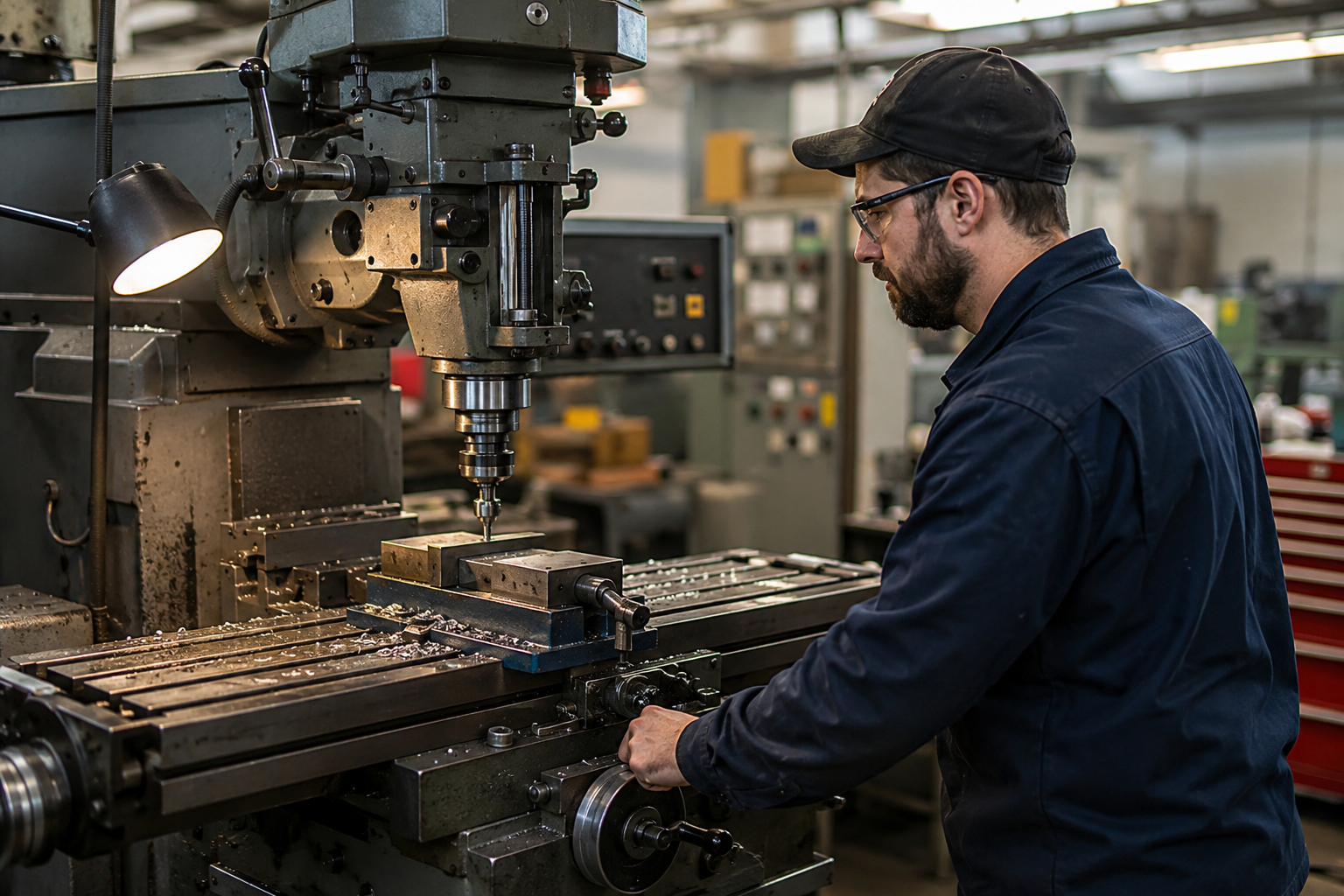
When most people hear the word “machinist,” they picture someone standing in front of a machine, pushing buttons and watching metal chips fly.
While that’s certainly part of the job, it only tells a small piece of the story.
In reality, a CNC machinist is part craftsman, part technician, part problem solver, and sometimes part detective. Every day involves a combination of planning, measuring, troubleshooting, producing, and continuously improving processes.
So what does a CNC machinist actually do all day?
Let’s take a look.
Starting the Day
For many machinists, the day begins by checking the machines and reviewing the work that needs to be completed.
In a production environment, there may be multiple jobs running at the same time. A machinist might review setup sheets, work instructions, engineering drawings, inspection reports, or production schedules before ever touching a machine.
The goal is simple: understand what parts need to be made and what requirements must be met.
Because in machining, making parts isn’t enough.
You have to make the right parts.
Setting Up the Machine
Before a machine can produce good parts, it needs to be set up properly.
This can involve:
- Loading raw material
- Installing cutting tools
- Setting tool offsets
- Loading CNC programs
- Verifying workholding
- Checking machine conditions
Depending on the complexity of the job, a setup may take a few minutes or several hours.
Many experienced machinists will tell you that setup is where the real work happens.
A machine that is set up correctly tends to run smoothly. A machine that is set up poorly tends to create headaches all day long.
Running Parts
Once everything is ready, production begins.
The machine starts cutting material and transforming it into finished components.
To an outside observer, it may look like the machinist is simply watching the machine work.
What they don’t see is everything happening in the machinist’s mind.
The machinist is listening for unusual sounds.
Watching chip formation.
Monitoring tool wear.
Checking coolant flow.
Paying attention to machine behavior.
Looking for subtle signs that something is beginning to drift out of control.
A good machinist learns to recognize problems before they become scrap.
Measuring Parts
One of the most important responsibilities of a machinist is inspection.
After parts are produced, they must be measured to ensure they meet the engineering requirements.
This might involve:
- Calipers
- Micrometers
- Pin gages
- Indicators
- Height gages
- Coordinate measuring machines (CMMs)
Some dimensions may have tolerances tighter than the thickness of a human hair.
A machinist must understand how to measure accurately and consistently.
Making parts quickly means nothing if they don’t meet the drawing.
Troubleshooting Problems
No machining process is perfect.
Tools wear out.
Materials vary.
Machines drift.
Unexpected problems appear.
A large portion of a machinist’s job involves troubleshooting.
For example:
A dimension suddenly starts growing.
A tool begins chattering.
Surface finish becomes poor.
Parts stop fitting together correctly.
Cycle times increase.
The machinist’s job is to identify the root cause and develop a solution.
This is one of the reasons many machinists enjoy the trade.
Every day presents new puzzles to solve.
Working With Drawings
Machinists spend a surprising amount of time reading engineering drawings.
A drawing communicates exactly what the finished part should look like.
Dimensions, tolerances, surface finish requirements, materials, and notes all provide critical information.
Learning how to read prints is one of the most important skills a machinist can develop.
The machine cuts the material.
The drawing tells you what you’re trying to create.
Improving Processes
The best machinists aren’t satisfied with simply maintaining a process.
They’re constantly looking for ways to improve it.
Maybe a tool lasts longer if the feeds and speeds are adjusted.
Maybe setup time can be reduced.
Maybe inspection can be simplified.
Maybe scrap can be eliminated.
Small improvements made consistently over time can save thousands of dollars and countless hours.
Many of the biggest gains in manufacturing come from machinists who notice opportunities others overlook.
Training and Communication
As machinists gain experience, they often spend more time helping others.
This may involve:
- Training new operators
- Writing work instructions
- Explaining setups
- Assisting with quality issues
- Coordinating with engineering
Manufacturing is a team effort.
The ability to communicate clearly becomes increasingly valuable as responsibilities grow.
The Reality of the Job
One of the biggest misconceptions about machining is that it’s repetitive.
While some production jobs can become routine, machining is rarely as simple as pushing a button all day.
Every machine has its own personality.
Every material behaves differently.
Every part presents unique challenges.
The work constantly demands attention, observation, and critical thinking.
That’s part of what makes the trade rewarding.
More Than Making Parts
At the end of the day, machining is about creating things that matter.
Aircraft components.
Medical devices.
Automotive parts.
Industrial equipment.
Products that people rely on every day.
Most people will never see the machinist who made those parts.
They’ll never know the problems that were solved or the precision required to produce them.
But behind almost every manufactured product is a machinist who helped turn an idea on a drawing into something real.
That’s what a CNC machinist actually does all day.
Not just run machines.
Solve problems, create solutions, and transform raw material into something useful.