
If you’re new to machining, one of the first things you’ll notice is that there are tools everywhere.
Walk into any machine shop and you’ll see machines the size of pickup trucks, toolboxes packed with measuring equipment, racks of cutting tools, and drawers full of hand tools. To someone on the outside, it can feel overwhelming.
The good news is that you don’t need to understand everything at once.
In this article, I’ll give you a simple introduction to some of the most common tools used in machining and explain what they do.
CNC Machines
When most people think of machining, they think of CNC machines.
CNC stands for Computer Numerical Control. These machines follow programmed instructions to cut, drill, bore, thread, and shape material into finished parts.
There are many different types of CNC machines, but two of the most common are CNC lathes and CNC mills.
CNC Lathes
A CNC lathe works by rotating the material while a stationary cutting tool removes material.
Imagine putting a piece of metal into a giant, extremely precise drill chuck and spinning it at thousands of revolutions per minute. The cutting tools move into the spinning material and create the desired shape.
Lathes are commonly used to make shafts, bushings, fittings, pins, and many other round components.
CNC Mills
A CNC mill works differently.
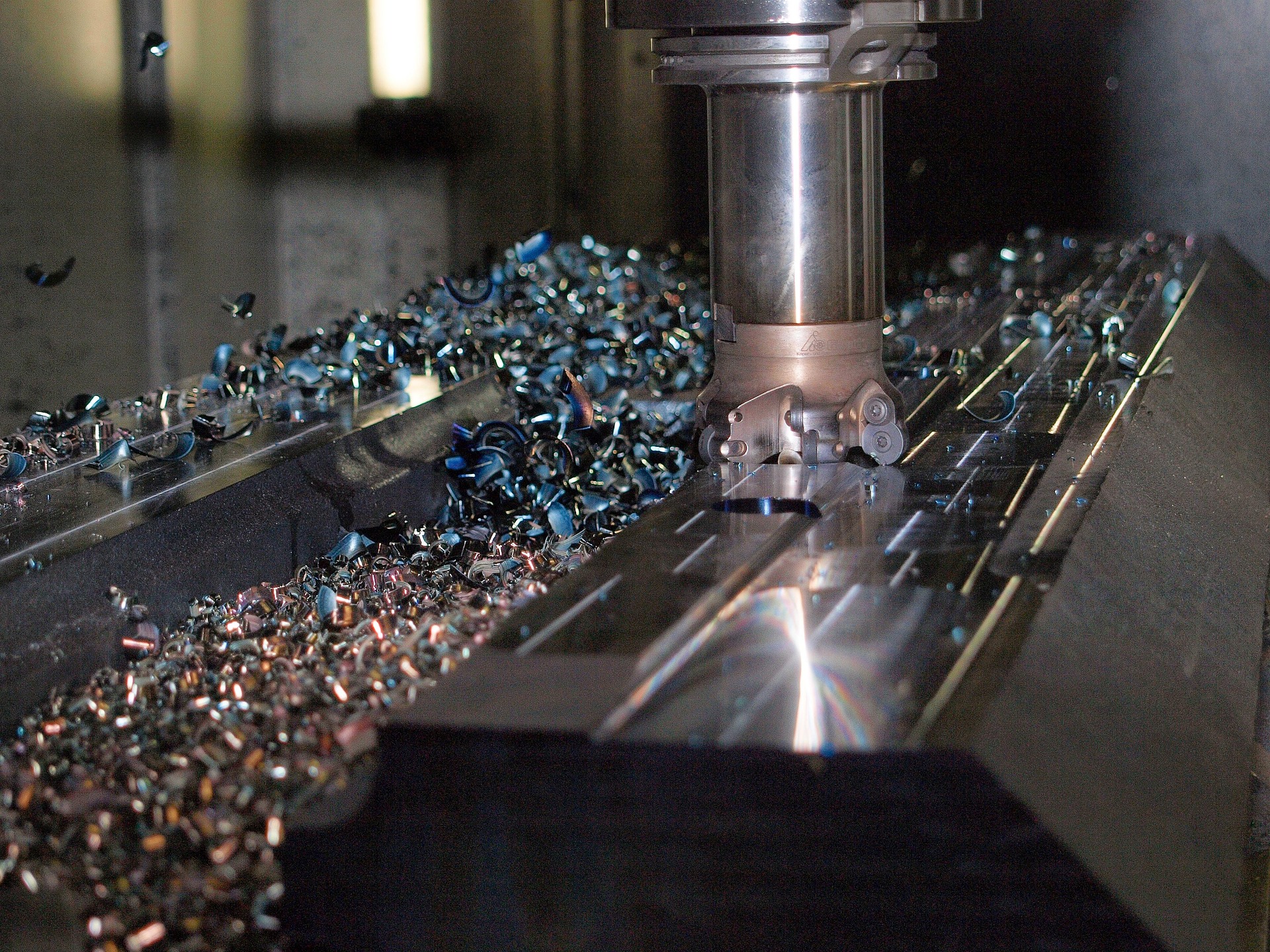
Instead of spinning the material, the cutting tool spins while the material remains clamped in place.
The machine moves the tool in multiple directions to create pockets, slots, contours, holes, and complex three-dimensional shapes.
Many aerospace and medical parts are produced on CNC mills because of their flexibility and precision.
Cutting Tools
The machine itself doesn’t actually cut the material.
The cutting tool does.
Think of the CNC machine as the vehicle and the cutting tool as the tire touching the road.
End Mills
End mills are one of the most common cutting tools in a machine shop.
They look somewhat similar to drill bits, but they are designed to cut from the side as well as the bottom.
Machinists use end mills to create slots, pockets, profiles, and complex shapes.
Drills
Drills are used to create holes.
While that sounds simple, there are hundreds of different drill styles designed for different materials and applications.
Some drills are optimized for aluminum. Others perform better in stainless steel or titanium.
Turning Inserts
On CNC lathes, replaceable carbide inserts are often used for cutting.
These inserts are designed for roughing, finishing, threading, grooving, and many other operations.
When an insert becomes worn, it can usually be indexed to a fresh cutting edge instead of replacing the entire tool.
Measuring Tools
A machinist’s job isn’t just making parts.
It’s making parts that meet the drawing requirements.
That’s where measuring tools come in.
Calipers
Calipers are often the first measuring tool new machinists learn to use.
They can quickly measure outside diameters, inside diameters, depths, and lengths.
While they aren’t the most precise tool in the shop, they are incredibly versatile.
Micrometers
When greater precision is required, machinists often reach for a micrometer.
Micrometers can measure dimensions to within a thousandth of an inch or even finer depending on the application.
Many experienced machinists trust their micrometers more than almost any other measuring tool.
Indicators
Dial indicators and test indicators are used to measure tiny amounts of movement.
They help machinists align fixtures, center parts, check runout, and verify machine setup accuracy.
A good indicator can reveal problems that would otherwise be impossible to see with the naked eye.
Pin Gages
Pin gages are precision-ground pins used to verify hole sizes.
Instead of measuring the hole directly, a machinist can determine whether a specific size pin fits correctly.
This method is often faster and more reliable than trying to measure small holes with other tools.
Workholding Equipment
Before a part can be machined, it has to be held securely.
This is known as workholding.
Vises
On milling machines, vises are one of the most common workholding devices.
They clamp the material securely while allowing the cutting tools access to the part.
Chucks
On lathes, chucks grip round stock and rotate it during machining.
A properly functioning chuck is critical for producing accurate parts.
Fixtures
For production work, custom fixtures are often built specifically for a particular part.
Fixtures improve consistency, reduce setup time, and increase productivity.
Hand Tools
Even in shops filled with advanced CNC equipment, simple hand tools remain essential.
Deburring Tools
Machining often leaves sharp edges behind.
Deburring tools remove these sharp edges and make parts safer to handle.
Allen Wrenches
Allen wrenches are used constantly for changing tools, adjusting holders, and performing machine setups.
Most machinists probably use them dozens of times a day without thinking about it.
Torque Wrenches
Some components must be tightened to a precise specification.
Torque wrenches help ensure that fasteners are neither too loose nor too tight.
The Most Important Tool
After all this talk about machines and equipment, it’s worth mentioning something important.
The most valuable tool in any machine shop isn’t a CNC machine, a micrometer, or a carbide insert.
It’s the machinist.
Machines are powerful. Software is impressive. Tooling continues to improve every year.
But none of those things matter without someone who understands the process.
Good machinists solve problems. They understand materials. They know how to adapt when something isn’t working. They take pride in making parts that meet requirements and perform their intended function.
The tools make machining possible.
The machinist makes it successful.